Cutting Carbon in Co-ops & Condos:
Strategic Decarbonization Planning
for Local Law 97 & Beyond


In recognition of buildings’ role in climate change and the need to rapidly decarbonize our built environment, the industry has begun a paradigm shift to integrate carbon emissions reduction into capital planning. Not only do buildings need to become more resilient to worsening climate impacts like severe weather and increasing temperatures, but decarbonization can also reduce operating costs amidst rising utility rates, improve occupant health and comfort, and enhance property value.

The regulatory landscape has also reacted to this new reality, enacting policies such as Local Law 97 (LL97), New York City’s most ambitious climate law and central to the State’s long-term decarbonization goals. Within the multifamily sector, cooperatives (co-ops) and condominiums (condos) face particularly high barriers to decarbonization given unique funding constraints and governance structures. This project educates stakeholders on what deep decarbonization means for co-ops and condos while equipping them with the technical solutions, financial expertise, and planning strategies they need to comply with local laws, reduce operating costs, improve building performance, and increase asset value.

download:


read:
About the Resources

Building a Strategic Decarbonization Plan:

Because of LL97’s long-term glide path to zero emissions, buildings can make incremental changes over time to achieve compliance. To avoid unnecessary costs and disruption, projects should align with a building’s financial and technical needs. A Decarbonization Plan provides a long-term roadmap to reduce emissions by sequencing projects around key milestones such as capital planning cycles, equipment end-of-life, available incentives, and evolving policy requirements. This approach makes compliance more financially and logistically manageable. These resources guide you through a five-step process known as Strategic Decarbonization Planning (SDP). SDP supports more cost-effective outcomes by aligning upgrades with building events and financing cycles, while remaining responsive to changes in policy, technology, and incentives over time. Through careful planning, strategic phasing, and well-timed investments, SDP helps teams overcome common barriers to reducing emissions and achieving compliance—while also improving building value, resident health and comfort.


This process will involve multiple stakeholders at different steps. These icons are used to indicate the roles and responsibilities of each key stakeholder type.


Board Members are elected volunteer shareholders from the building responsible for managing building finances, maintenance, and compliance with local laws and regulations.


Property Managers oversee the day-to-day operations, maintenance, and administration of their building.


Consultants help provide technical expertise for building evaluation and upgrade projects.

Step 1:
Initiate the Project

Many co-ops and condos approach decarbonization on an as-needed basis—often in response to immediate compliance deadlines or equipment failures. Boards and managing agents may work independently, engaging consultants or contractors late in the process, which can result in limited coordination, unclear responsibilities, and missed opportunities for funding or performance optimization. The first step in building a Decarbonization Plan is to convene relevant stakeholders and clearly define roles, goals, and a solid business case to receive buy-in from the building to pursue this work. Disorganization and indecision early in the process can make or break successful decarbonization planning, so ensure the building is set up for success with a clear roadmap and identified individuals to champion this process.
At this step, utilize the resources to the right. The checklist will help you keep track of the key action items in this step, and the slide deck will help you communicate Local Law 97 and its implications as well as the value of decarbonization to board members and other shareholders.
https://be-exchange.org/wp-content/uploads/2026/04/CC_step1_stakeholdericons-1.webp

   Step 1 Resources:


  Checklist


  Slide Deck


Step 2:
Examine Current Conditions

A building’s path to decarbonization depends on its current energy and carbon profile, system conditions, available financing, and timing of upgrades. As building performance policy tightens over time, delaying action can lead to higher costs and penalties. By planning ahead, boards can combine system renewal with efficiency or electrification upgrades to avoid unnecessary costs and penalties. Buildings should view a building conditions assessment as not only necessary to avoid penalties, but an opportunity to proactively align capital planning, resident communications, and long-term asset management.
At this step, utilize the resources to the right. The checklist will help you keep track of the key action items in this step.
https://be-exchange.org/wp-content/uploads/2026/04/CC_step2_stakeholdericons.webp

   Step 2 Resources:


  Checklist


Step 3:
Develop a Plan

With a holistic assessment of the building’s equipment, operations and maintenance procedures, financial standing, and external market factors such as regulation and energy completed, the board, board treasurer, and a licensed energy engineer should work together to devise a phased Decarbonization Plan that uses an approach known as Resource Efficient Decarbonization (RED). RED focuses on implementing enabling steps that retain future optionality and flexibility to a Decarbonization Plan as technology, market conditions, and policy evolve. This framework allows boards to take action now, instead of waiting for better technology and potentially renewing a fossil-fueled powered energy system for another life cycle.
At this step, utilize the resources to the right. The checklist will help you keep track of the key action items in this step, and the case studies demonstrate success stories of other co-ops and condos that have improved their building’s performance. The financing guide provides information on available financial incentives and financing options eligible to co-ops and condos.
https://be-exchange.org/wp-content/uploads/2026/04/CC_step3_stakeholdericons.webp

   Step 3 Resources:


  Checklist


  Case Studies


  Financing Guide


Step 4:
Execute the Plan

Following the decision to undertake a Decarbonization Plan, the board should utilize qualified and dependable service providers to assess project costs, energy efficiency impacts, operating savings, available incentives, and applicable warranties. The consultant should also develop a detailed scope of work and bid documents in coordination with the building’s insurance broker and attorney. Boards should then vet qualified vendors, conduct a competitive bidding process, and select a contractor. Finally, an attorney should be engaged to structure and negotiate the contract.
At this step, utilize the resources to the right. The checklist will help you keep track of the key action items in this step.
https://be-exchange.org/wp-content/uploads/2026/04/CC_step4_stakeholdericons.webp

   Step 4 Resources:


  Checklist


Step 5:
Monitor & Report

The final key step in a Decarbonization Plan is to file any reports to comply with local laws and monitor project impact. This involves the property management team and consultants to calculate emissions for LL97, complete and file compliance reports, and finding synergies with other local laws to balance limited funds and limit duplicative work. Establish a routine of providing annual updates on LL97 compliance to residents. Monitor the success of the Decarbonization Plan by reviewing changes in energy use and follow up on contractual agreements when and if necessary.
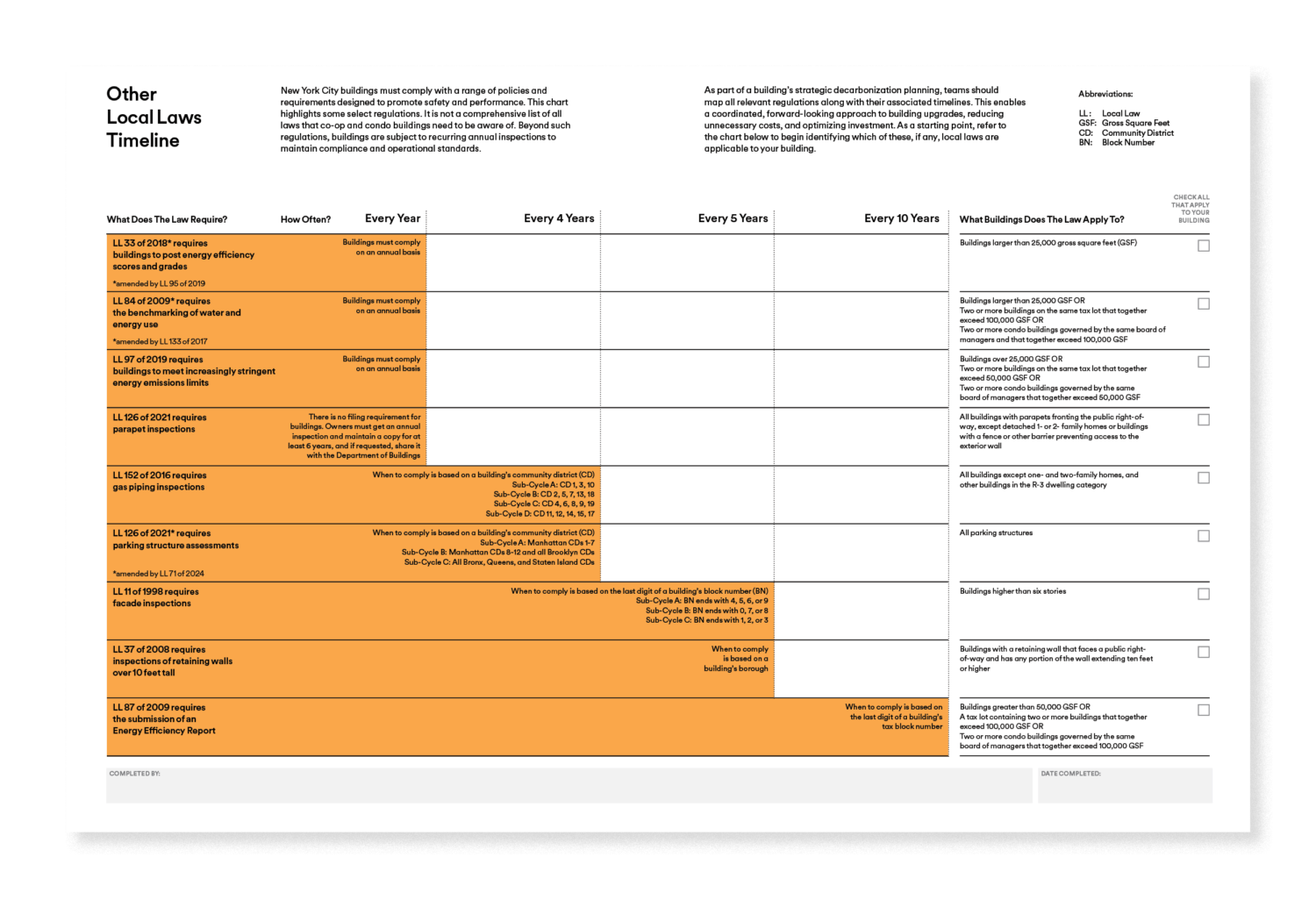
At this step, utilize the resources to the right. The checklist will help you keep track of the key action items in this step, and the Other Local Laws Timeline reviews reporting timelines and requirements of other key local laws beyond LL97.
https://be-exchange.org/wp-content/uploads/2026/04/CC_step2_stakeholdericons.webp

   Step 5 Resources:


  Checklist


  Other Local Laws Timeline


Conclusion:

New York City’s buildings account for nearly 70% of city-wide carbon emissions, making the built environment the most impactful sector for advancing climate action. Local Law 97 (LL97) responds to this challenge by driving investment in energy efficiency upgrades, electrification, and improved operations across the city’s largest buildings. As one of the most ambitious climate laws in the country, LL97 is central to New York State’s long-term decarbonization objectives and signals a broader shift toward performance-based building regulation.
Cooperatives and condominiums face distinct compliance barriers within this landscape. Their governance and funding structures often complicate decision-making, slow project timelines, and limit early coordination among stakeholders. These challenges underscore the importance of assembling a coordinated project team early and establishing a clear roadmap for compliance.
Strategic Decarbonization Planning enables boards to phase necessary building upgrades in a manner aligned with budget cycles, reserve planning, resident priorities, and long-term operational goals. By defining roles, clarifying timelines, and identifying the most strategic intervention points, a Decarbonization Plan turns a complex regulatory requirement into a manageable and financially prudent pathway forward.
Looking ahead, local building performance policy like LL97 will continue to drive NYC’s building decarbonization progress. Building teams that grow internal capacity, strengthen governance processes, and adopt long-term planning approaches will be better positioned to navigate future requirements and create better performing, more comfortable, and healthier buildings. With the right knowledge, tools, and confidence to begin the process, cooperatives and condominiums can play an active role in shaping a more resilient, efficient, and low-carbon built environment for New York City and beyond.

read:

Credits

download:
Cutting Carbon in Co-ops & Condos: Strategic Planning Workbook